
CRO Handover · 17 October 2026 · 2 min read
Page 4: How your sales development team is really paid
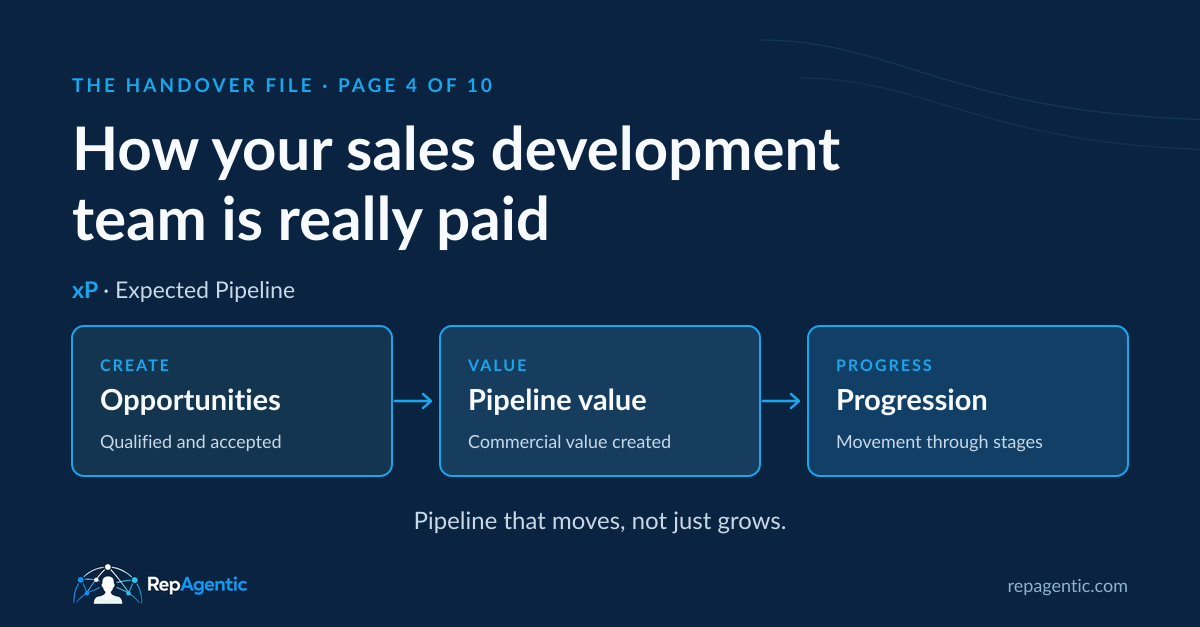
A new CRO should check whether sales development pay rewards opportunities that progress, not just meetings. Page four of the Handover File uses my xP (Expected Pipeline) work as an example of rewarding more than volume.
By Jeremy Heap, Founder, RepAgentic
Ask for the latest commission statement, not just the compensation plan. The plan tells you what should earn money. The statement shows what did.
Follow one payout into the CRM. Did the account executive receive an opportunity worth developing, or a meeting that needed qualifying again?
If the sales development representative was paid and the opportunity was quietly discarded, put both records on the same page. You have two definitions of success.
What should sales development pay reward?
In previous work at a global enterprise software company, I developed an xP (Expected Pipeline) approach for account development representatives. It combined qualified-opportunity requirements, pipeline-value targets and an accelerator tied to stage-weighted progression.
The intent was to reward opportunities, value and the progression that drives pipeline velocity, not simply more names entering the funnel. Creating pipeline and helping it move became connected objectives.
That requires shared accountability. Sales development representatives create and qualify opportunities; account executives develop and win them. A progression incentive needs account executive ownership too, not just more pressure on the team. Don't make the entire payout depend on a final close.
What should a new CRO check in week one?
Replay a sample of recent payouts against opportunity acceptance, pipeline value and subsequent progress. Where payment and buyer evidence diverge, investigate the standard before changing targets.
Page three tested whether today's pipeline is real. This page asks whether the reward system will reproduce it. In RepAgentic's framework, Team Design connects roles, ownership and incentives.
Next, page five: what buyers understand in ten seconds.
Before you ask for better pipeline, check what earns the payment.
Where this starts
Is your team set up to create the right pipeline?
The free RepAgentic Outside-In Read examines your go-to-market from public evidence and identifies where to look first. It cannot confirm private compensation rules or actual payouts; those need internal evidence through verification. Start with the free read and see what is visible before deciding what to examine next.