
CRO Handover · 15 October 2026 · 2 min read
Page 2: The accounts you really win
The first-90-days plan that got you hired was probably built with help from an AI tool. Page two of the handover file checks it against the customers who actually buy.
By Jeremy Heap, Founder, RepAgentic
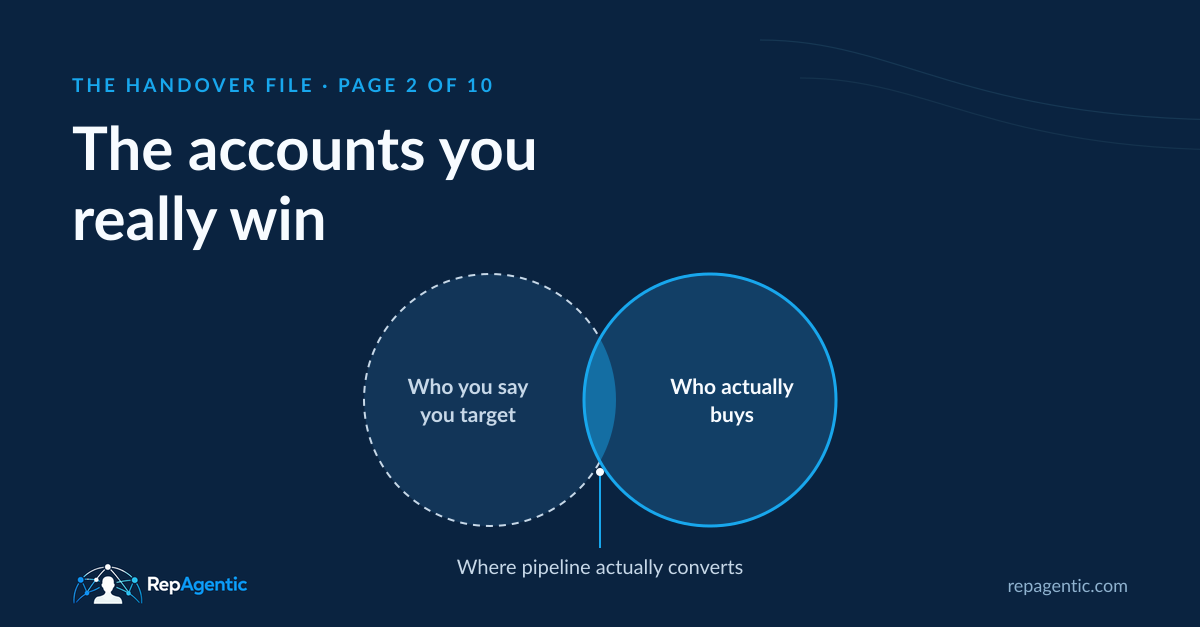
Every go-to-market has two customer lists. One sits in the strategy deck: the segments the company says it targets. The other sits in the closed-won report: the customers who actually signed. A new CRO is usually handed the first. The second is the one that tells the truth.
If you interviewed for the role, you probably showed the panel your first 90 days, with an AI tool helping set out the ideal customer profile, target markets and top opportunities. But the AI read the website, the positioning and competitors' claims. That's the company's story about who it serves. The plan that got you hired is the strategy deck, rewritten, and now you're measured against it.
When the story and the buyers don't match, the team works where the company hopes demand exists, rather than where it does. Pipeline that looks strong but rarely wins, the pattern in Amazing pipeline, terrible win rates, often starts here.
Test your interview plan before day one
For each segment it names, ask:
- Which customers bought in the last year?
- Is the evidence customers buying, or the company describing itself?
- Which customers appear in public that the plan doesn't mention?
Why this page comes first
Market Reality comes first of the eight capabilities because every one after it inherits its answer. Pay plans, value stories, plays and targets are all built for a market. Get the market wrong, and each is tuned for the wrong buyer.
Tomorrow, page three: where next year's pipeline is meant to come from.
The plan that got you hired shows who the company says it wins. The evidence shows who it does.
Where this starts
Who does the evidence say you win?
The free RepAgentic Outside-In Read goes further than an AI summary. It separates what the company says about itself from what the public evidence shows, places your go-to-market on the four-band maturity scale and names the first thing to fix. Typically within one business day.