
CRO Handover · 19 October 2026 · 2 min read
Page 6: Where opportunities stall
A new CRO should check stalled opportunities for missing buyer decisions, not just overdue sales tasks. Page six of the Handover File separates seller activity from buyer progress, so the forecast reflects a credible decision.
By Jeremy Heap, Founder, RepAgentic
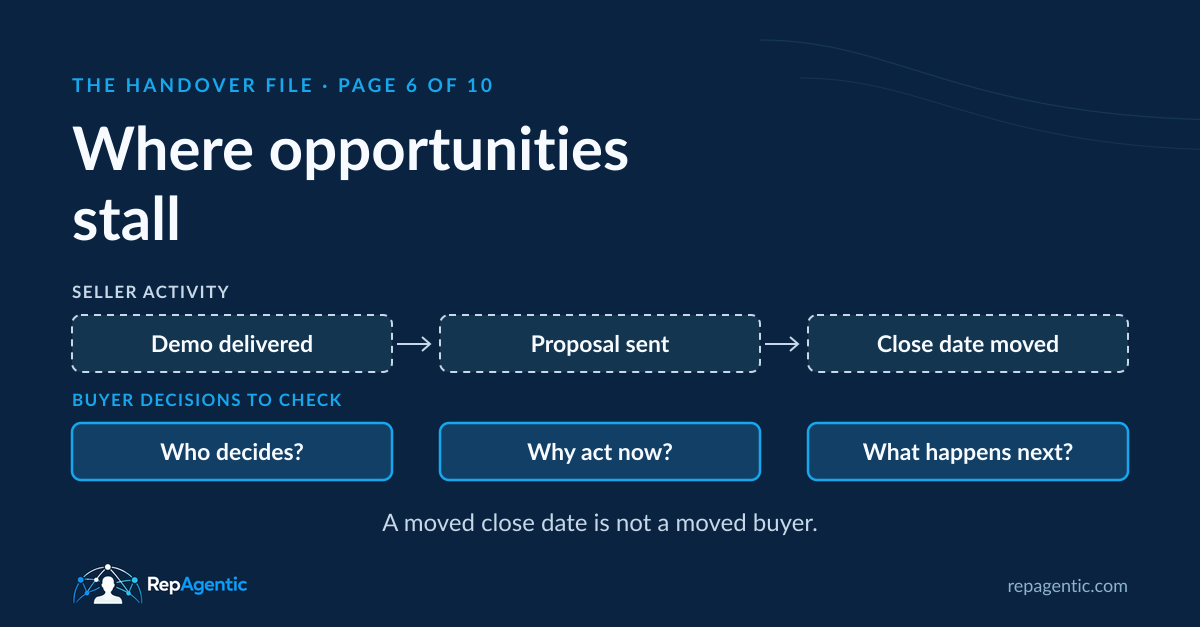
Ask for the previous close dates on an important opportunity. What changed on the buyer's side between each date?
Was a decision made? Did someone take ownership? Was a reason to act confirmed? If only the date changed, the forecast moved. The opportunity may not have.
A demo delivered and a proposal sent tell you what your team completed. They do not, on their own, explain why the buyer will commit.
What should a new CRO check when opportunities stall?
Put the seller's activity beside the buyer's commitments. Find the last decision the buyer actually made and the next one they need to make. Who owns it, when will it happen, and what could prevent it?
Then look across several stalled opportunities. One delayed decision may be specific to that account. The same missing decision across the pipeline is a reason to examine the sales motion, not demand more follow-up emails.
Don't confuse a longer buying process with a bad opportunity. Keep the ones with a credible route forward, correct unsupported dates and stop counting seller activity as proof of buyer intent.
Fix the motion, not just the forecast
In RepAgentic's framework, Motions covers how business is found, qualified, progressed and won. Page three tested whether inherited pipeline was real. This page asks whether the team can move it forward consistently.
Set the evidence needed to progress and make ownership explicit. You want fewer quarter-end surprises, not a tidier explanation for the same missed number.
Next, page seven: how long a new representative takes to produce.
A moved close date is not a moved buyer.
Where this starts
Where should you look before chasing harder?
The free RepAgentic Outside-In Read examines your public go-to-market and identifies visible gaps and where to look first. It cannot determine why individual CRM opportunities have stalled. Those questions need internal buyer and opportunity evidence through verification. Start with the free read, then decide what to examine next.