
CRO Handover · 18 October 2026 · 2 min read
Page 5: What buyers understand in ten seconds
A new CRO should check whether buyers recognise their problem, the outcome and a reason to change without a salesperson translating. Page five of the Handover File tests the Value Story, not presentation polish.
By Jeremy Heap, Founder, RepAgentic
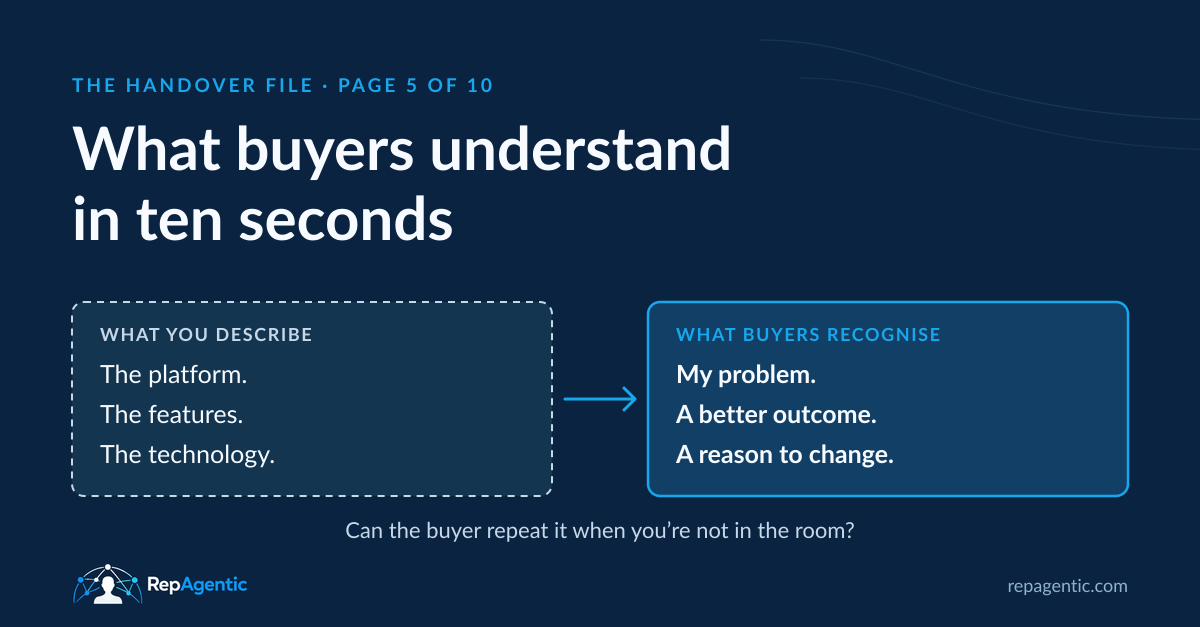
Your first week comes with a company briefing. Buyers get a headline, an email or the opening minute of a call.
Put the homepage beside a sales development email and an account executive's opening slide. Are they telling the same buyer the same story? Or does each team need a different explanation before the value becomes clear?
What should a buyer understand immediately?
Give someone who fits your target market ten seconds with the opening message. Then hide it and ask them to explain who it helps, what changes for that person and why the change matters.
Ten seconds is a practical test, not a claim about attention spans. You are checking recognition, not asking someone to understand the entire product.
If they repeat a list of features, you have taught them your vocabulary. If they can describe a problem they own and an outcome they want, you have given them a reason to continue.
Then ask what makes that outcome believable and different from their current approach. A promise that any competitor could make still leaves the buyer doing the hard work.
The page to settle before increasing activity
In RepAgentic's framework, Value Story means stating the reason to change in the buyer's terms, consistently across the team. Page four aligned the reward; this page checks the message that earns the conversation.
Don't commission a rebrand on day one. Find the language buyers recognise, attach credible proof and give the team a shared starting point.
Next, page six: where opportunities stall.
Your value story is what the buyer can repeat when you're not in the room.
Where this starts
Can buyers see the reason to change?
The free RepAgentic Outside-In Read examines your public go-to-market, including the value story a buyer encounters before speaking to your team. It identifies visible gaps and where to look first. Internal sales conversations and buyer understanding need further evidence; the public message is the starting point, not the whole picture.